Paved With Purpose: How Street Design Quietly Engineers Your Social Life
When most people evaluate a potential home, they scrutinize square footage, appliance finishes, and proximity to their preferred grocery store. Rarely does anyone pause at the curb to consider the street itself—its width, its rhythm, its relationship to sidewalks and front doors. Yet the physical geometry of a neighborhood's roads may be the single most underappreciated factor in determining the quality of your daily social life.
This is not a peripheral concern. Where you live shapes who you meet, and how the streets are arranged determines whether those meetings happen at all.
The Geometry of Encounter
Urban planners have studied pedestrian behavior for decades, and the findings are consistent: people form relationships with those they encounter repeatedly and without effort. Sociologists call this the mere exposure effect—familiarity breeds connection. The architectural question, then, is which street layouts produce the conditions for repeated, low-friction encounter.
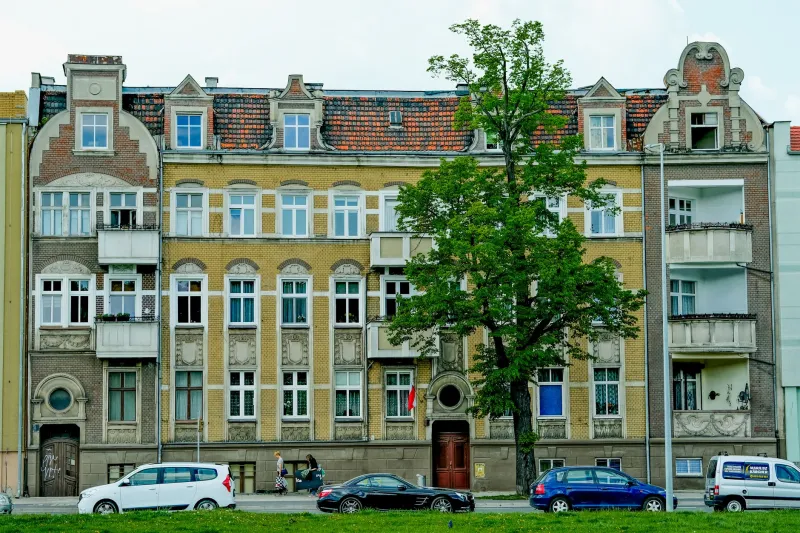
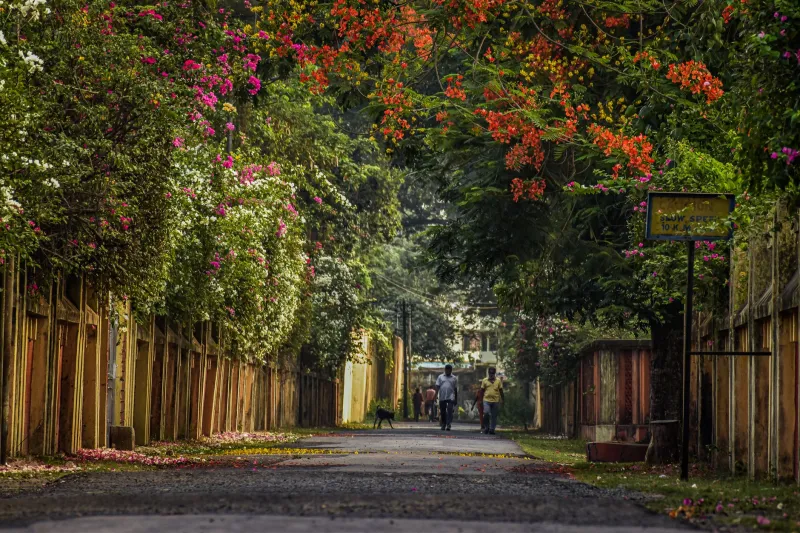
Tree-lined boulevards with wide sidewalks and reduced traffic speeds consistently outperform strip-mall corridors and high-speed arterials on this measure. When a street is walkable—when its sidewalks are shaded, its traffic is calm, and its storefronts or building entrances face the pedestrian—residents are more likely to walk it regularly. And regular walkers become recognizable faces. Recognizable faces become neighbors you actually know.
Contrast that with a neighborhood organized around a six-lane commercial corridor. The pedestrian experience is hostile: crosswalks are infrequent, traffic noise is persistent, and the built environment orients itself toward the automobile rather than the person on foot. Residents in such areas may live within a quarter mile of one another for years without ever exchanging a word.
Cul-de-Sacs: Intimacy With Limits
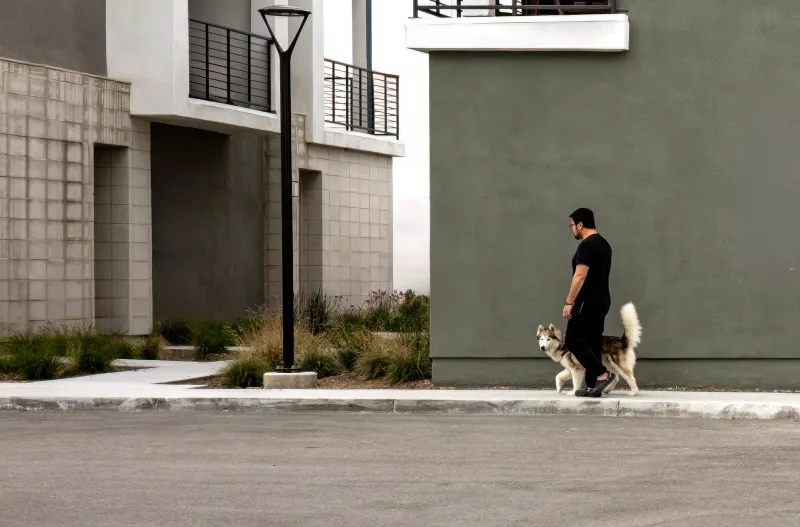
The cul-de-sac has long been marketed as the safest, most family-friendly residential configuration—and it does deliver certain genuine advantages. Reduced through-traffic creates a quieter environment, and children can play with less supervision in the street itself. Research from the University of California, Berkeley, and other institutions has confirmed that cul-de-sac residents tend to know their immediate neighbors better than residents on through-streets.
But that intimacy comes with a structural ceiling. The cul-de-sac, by design, eliminates the casual stranger—the person passing through who might become a friend, a professional contact, or simply a familiar and reassuring presence. The social ecosystem of a cul-de-sac is predetermined by whoever happened to buy or rent there before you arrived. If the chemistry is good, you may find it deeply satisfying. If it is not, there is no natural mechanism for refreshing the social pool.
Through-streets, particularly those with pedestrian infrastructure, function differently. They generate a continuous, low-level social current. You do not choose who passes your door, and that randomness is precisely the point. Some of the most durable social connections in urban life begin with nothing more than a repeated nod on a morning walk.
What Tree Canopy Signals About a Street
Mature street trees are one of the most reliable proxy indicators of a neighborhood's social character. Their presence signals that the block has been maintained with long-term residents in mind rather than short-term aesthetics. Shade slows pedestrians; it makes lingering comfortable. Benches, when present, do the same. These are not decorative choices—they are social infrastructure.
Neighborhoods with significant tree canopy also tend to have lower ambient noise levels, which makes outdoor conversation more natural. A front porch conversation is a fundamentally different social act on a quiet, shaded street than on a sun-baked sidewalk adjacent to moving traffic. The former invites extension; the latter encourages retreat.
When evaluating a potential home, walk the surrounding blocks at different times of day. Notice whether people are outside. Notice whether they are moving purposefully or lingering. A street where residents linger is a street that has been designed—consciously or not—to support social life.
Mixed-Use Streets and the Accidental Third Place
Urban sociologist Ray Oldenburg popularized the concept of the "third place"—a location that is neither home nor work but serves as a regular gathering point for community members. Coffee shops, barbershops, corner markets, and neighborhood bars have historically filled this role. What is less frequently discussed is how the street design surrounding these spaces determines whether residents actually use them.
A coffee shop on a walkable, mixed-use street functions as a genuine third place. Residents arrive on foot, encounter familiar faces, and extend their stay. The same coffee shop in a strip mall, accessible primarily by car, functions primarily as a transaction point. You arrive, you order, you leave. The social potential is structurally suppressed.
For prospective residents, this distinction matters enormously. A neighborhood with mixed-use zoning and pedestrian-oriented street design creates the conditions for an organic social life—one that does not require deliberate effort or calendar coordination. The community assembles itself around the infrastructure.
Reading the Street Before You Commit
Before signing a lease or making an offer, dedicate time to understanding the street network surrounding a property—not just the immediate block, but the connective tissue linking it to parks, transit stops, retail, and other residential clusters. Ask yourself the following:
- Are sidewalks continuous, or do they disappear at intersections and force pedestrians into the street?
- Is the tree canopy mature enough to provide meaningful shade during warmer months?
- What is the traffic speed and volume on the primary street? Is conversation possible without raising your voice?
- Are there visible third places—cafés, markets, community spaces—within comfortable walking distance?
- Do you see other pedestrians during your visit, or is the street largely empty?
These observations are not merely aesthetic preferences. They are structural predictions about the social life you will actually lead from this address.
The Fairlane Perspective
At Fairlane Residences, we believe that a home worth inhabiting is one that connects you to a life worth living. The unit itself is only part of that equation. The streets, the sidewalks, the trees, and the rhythms of your immediate neighborhood are the framework within which daily life unfolds.
A building with exceptional finishes on a socially inert street may deliver comfort without community. A more modest unit on a well-designed, walkable block may quietly become the address where your most meaningful relationships take root. Choose accordingly.