The Myth of the Better Address: What You Lose When You Chase Someone Else's Ideal Neighborhood

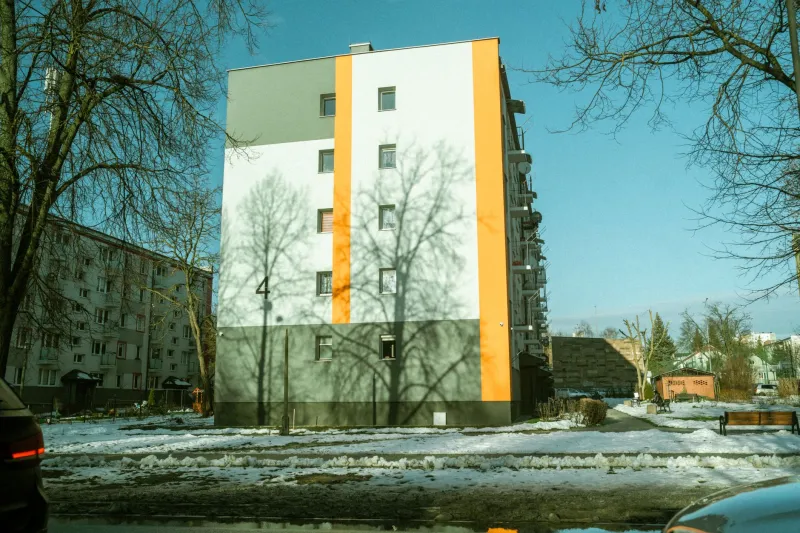
Photo by Photo by Nikolai Kolosov on Unsplash on Unsplash
There is a particular kind of restlessness that afflicts many thoughtful renters and buyers in the United States today. It is not dissatisfaction with their apartment's square footage or their monthly rent. It is something more elusive: the persistent feeling that the right neighborhood—the one that feels aligned with their aspirations, their aesthetics, and their sense of self—is somewhere just out of reach.
Social media accelerates this feeling considerably. Scroll through enough curated posts of morning coffee on a brownstone stoop, or an evening walk along a tree-lined boulevard in a newly revitalized district, and a very specific geography begins to feel like a prerequisite for a fulfilling life. Real estate listing platforms reinforce the impression. Walkability scores, proximity to artisan markets, and the density of well-reviewed restaurants are quantified and ranked as though community itself were a measurable commodity.
But community is not a commodity. And the relentless pursuit of the idealized address carries costs that rarely appear in any housing budget.
What Makes a Neighborhood Feel Like Home
Researchers who study residential attachment have long noted that the sense of belonging to a place is almost never immediate. It develops gradually, through accumulated small interactions: the barista who remembers your order, the neighbor who waves from across the courtyard, the dry cleaner who knows your name without being reminded. These micro-connections are so ordinary that they barely register as meaningful—until they are gone.
When residents relocate to a new neighborhood, even one they have admired for years, they typically find themselves starting this accumulation process from zero. The neighborhood that looked vibrant and welcoming from the outside can feel anonymous and indifferent when you are the newest arrival on the block. This is not a failure of the neighborhood. It is simply the nature of community: it takes time to earn your place within it.
The residents who report the highest levels of neighborhood satisfaction are rarely those who moved to the most prestigious address they could afford. They are, more often, the ones who stayed somewhere long enough to become genuinely woven into its fabric—who attended the block association meeting, who introduced themselves to the family next door, who weathered a difficult winter alongside their neighbors and came out the other side with something durable.
The Social Cost of Perpetual Searching
There is a compounding loss that accompanies frequent moves in search of the perfect neighborhood. Each relocation resets the social clock. The friendships that were beginning to solidify, the routines that were starting to feel natural, the local knowledge that was slowly accumulating—all of it must be rebuilt from scratch in the new location.
Over time, this pattern can produce a kind of social thinness: a life populated by many acquaintances and few genuinely deep local relationships. The resident who has lived in four neighborhoods over six years may know a great deal about real estate markets and neighborhood aesthetics, but they are unlikely to have the kind of rooted community that provides genuine support during difficult periods.
This is not an argument against moving. There are compelling and legitimate reasons to relocate—career changes, family circumstances, financial realities. But moving specifically in pursuit of a neighborhood's reputation or aesthetic appeal, with the expectation that the right address will deliver a sense of belonging, is a transaction that rarely delivers on its promise.
The Reputation Gap
Neighborhood reputations are, by definition, lagging indicators. The neighborhood that is currently celebrated on design blogs and lifestyle publications is already in the process of changing—often in ways that will eventually disappoint the very residents who were drawn by its reputation. Rents rise. Independent businesses are displaced. The organic, slightly rough-edged character that made the neighborhood interesting is gradually smoothed away by the very attention it attracted.
Conversely, neighborhoods that currently lack a strong reputation are frequently in the early stages of exactly the kind of development that creates lasting community. The residents who arrive before the reputation solidifies are the ones who get to participate in that formation—who become part of the neighborhood's story rather than latecomers to a narrative that has already been written.
Commitment as a Community-Building Strategy
The most counterintuitive insight about neighborhood satisfaction may be this: in many cases, the decision to stay—to invest more deeply in a place rather than searching for a better one—is the decision that produces the most meaningful residential life.
This does not mean accepting circumstances that are genuinely unsuitable. Safety, access to employment, proximity to schools, and the quality of one's immediate living environment are legitimate factors in any housing decision, and they deserve serious weight. But the intangible qualities that make a neighborhood feel like a true home—the sense of recognition, of belonging, of being known—are not features that can be relocated into. They must be cultivated, and cultivation requires time.
Residents who make this investment consistently report that the neighborhood they chose to commit to, even if it was not their first choice, eventually became the neighborhood they could not imagine leaving. The coffee shop became their coffee shop. The park became the place where their children learned to ride bicycles. The street became a place where they were greeted by name.
Before You Relocate, Ask a Different Question
The standard questions that precede a move—Is this neighborhood safe? Is it walkable? Does it have the amenities I want?—are worth asking. But they are incomplete. The more searching question is this: Have I genuinely invested in the community where I currently live? Have I introduced myself to my neighbors, engaged with the local institutions, given the place a fair opportunity to reveal itself?
If the honest answer is no, then the problem is unlikely to be solved by a new address. The qualities that make a neighborhood feel like home are not waiting in a more prestigious zip code. They are waiting, in large part, for you to show up and stay long enough to earn them.
At Fairlane Residences, we believe that finding the right home is only the beginning of the story. The chapter that matters most is the one you write by choosing, deliberately and repeatedly, to be present in the community you inhabit.