Light Before Everything: Why Natural Illumination May Be the Most Honest Measure of a Home

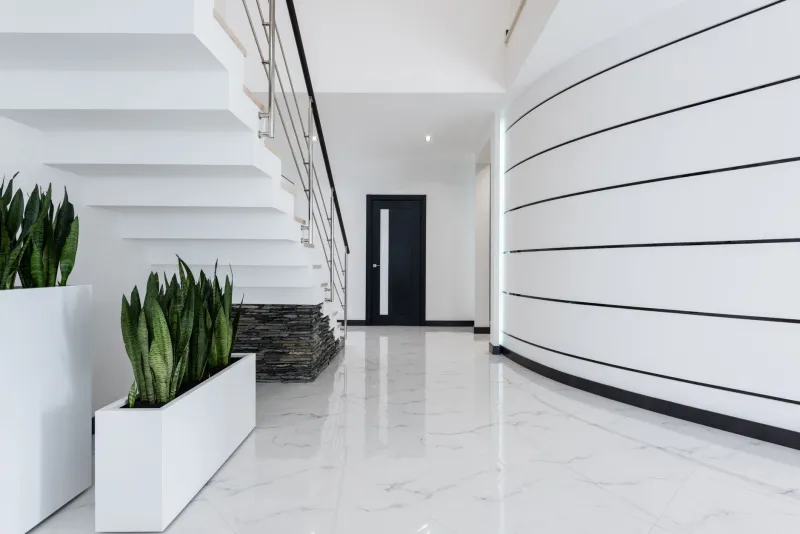
Photo: Shixart1985, CC BY 2.0, via Wikimedia Commons
Among the many things that a real estate listing cannot accurately convey, light may be the most significant. Photographs are taken on bright afternoons with every shade raised. Virtual tours are rendered with digital enhancement. Even in-person showings are typically scheduled during the hours when any apartment looks its most luminous. The result is that prospective residents frequently sign leases on the basis of a light environment they have never actually inhabited—and discover, over the months that follow, that the apartment they chose is quite different from the one they believed they were choosing.
This is not a trivial concern. The relationship between natural light exposure and human well-being is well-established in the research literature. Light affects circadian rhythm, serotonin production, sleep quality, and cognitive function. An apartment that receives generous morning light will tend to support a different quality of daily life than one that is dim until noon and bright only in the late afternoon. Neither is inherently superior—but neither is irrelevant, and the difference matters enormously depending on how you actually live.
Orientation Is Architecture
The single most important factor in a unit's light quality is not window size, ceiling height, or interior finishes. It is orientation—the direction the primary windows face relative to the sun's path across the sky.
In the continental United States, south-facing windows receive the greatest total daily light exposure across all seasons. The sun tracks from east to west through the southern sky, meaning that a south-facing unit benefits from light through most of the day. In winter, when the sun sits lower on the horizon, south-facing windows capture particularly valuable light that steeper-angled orientations may miss entirely.
East-facing units receive strong morning light and tend to be dim by early afternoon. For residents who wake early, work from home in the morning, and value the quality of light during the first half of the day, this orientation is often ideal. For those who sleep late or whose primary productive hours fall in the afternoon, the same orientation can feel frustrating—a unit that is brilliant at 8 a.m. and shadowy by 2 p.m.
West-facing units reverse this pattern. They are typically dim in the morning and fill with warm, direct light in the afternoon and evening. For residents who enjoy the quality of late-day light—the long, golden illumination of a late afternoon in summer—a west-facing unit can be genuinely beautiful. For those who work from home and are sensitive to glare, or who live in climates where afternoon heat gain is a concern, the same orientation may present real drawbacks.
North-facing units receive the least direct sunlight in the Northern Hemisphere. They are typically characterized by a consistent, diffuse light that avoids both glare and deep shadow. Artists and photographers have long valued north light for precisely this reason. For residential purposes, however, north-facing units can feel cool and dim, particularly during winter months when daylight hours are short and the sun's angle is low.
The Shadow Problem
Orientation alone does not determine a unit's actual light conditions. The built environment surrounding a building introduces a second variable of equal importance: shadow.
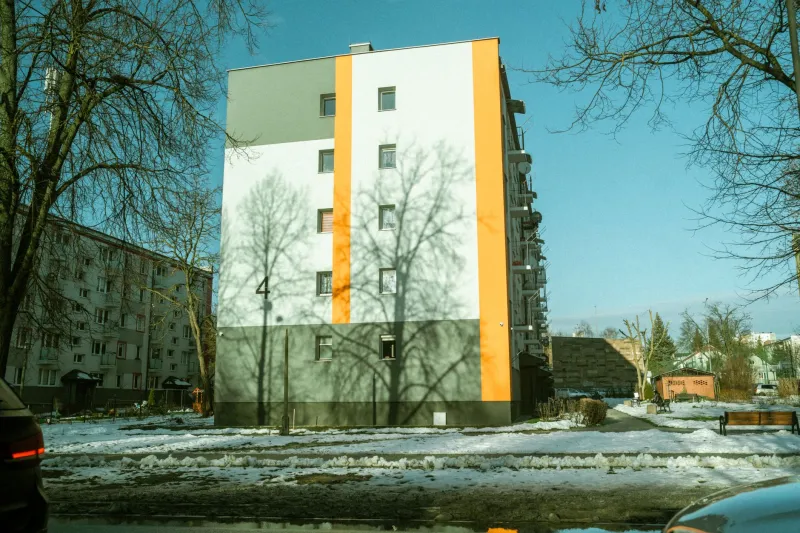
In dense urban environments, a unit with theoretically favorable orientation may receive very little direct light if a neighboring building blocks the sun's path during key hours. This is a problem that is extremely difficult to evaluate from a listing or even from a single visit, because the shadow patterns shift continuously across the day and change dramatically across seasons.
In summer, when the sun rises high in the sky, a neighboring building of modest height may cast no meaningful shadow on your windows. In winter, when the same sun sits much lower on the horizon, that same building may block your light almost entirely from mid-morning onward. A unit that feels bright and cheerful in July can feel genuinely dark from November through February—a reality that many residents discover only after they have signed a twelve-month lease.
The practical implication is that a serious evaluation of natural light requires more than one visit. It requires, ideally, visits at different times of day and, where possible, at different times of year. For residents who cannot manage multiple visits, tools such as sun-path modeling applications—several of which are available as smartphone apps—can provide a reasonable approximation of shadow conditions at a given address across different dates and times.
Seasonal Variation and the Winter Test
The seasonal dimension of light quality deserves particular attention for residents in northern states, where the difference between summer and winter daylight is substantial. A unit in Minneapolis, Chicago, or Boston that receives comfortable light in October may feel dramatically darker by January, when daylight hours are shorter and the sun's angle reduces its effective penetration through windows.
The residents who tend to be most surprised by this shift are those who moved into their apartment during warmer months and experienced their first winter in the space with no prior frame of reference. The apartment they signed for in May is, in a meaningful sense, a different apartment in December—not because anything has changed structurally, but because the light that animated it during the tour is simply no longer present.
For residents who are sensitive to seasonal light changes—and research suggests that a significant portion of the population is, even among those who do not meet the clinical threshold for seasonal affective disorder—this is a consideration that warrants explicit evaluation. Asking the building's management team or current residents about the unit's winter light conditions is a reasonable and often revealing inquiry.
A Framework for Honest Assessment
Evaluating a unit's true light value requires moving beyond the impression created during a single showing. The following framework offers a more systematic approach.
Document the orientation. Before or during your visit, confirm which direction the primary windows face. A compass app on your smartphone is sufficient for this purpose.
Identify obstructions. From each window, note the height and proximity of neighboring buildings, trees, and other structures. Consider how low-angle winter sunlight would interact with these obstructions.
Visit at multiple times. If possible, view the unit in the morning, at midday, and in the late afternoon. The differences can be striking.
Ask about winter conditions. If visiting during warmer months, ask directly about the unit's light quality in December and January. Current or former residents are often the most candid source on this question.
Consider your own light sensitivity. Reflect honestly on how natural light affects your mood, energy, and productivity. A resident who works from home and finds dim conditions draining should weight this factor more heavily than one whose schedule keeps them out of the apartment during daylight hours.
The Investment That Cannot Be Renovated
Almost every other shortcoming of an apartment can, in principle, be addressed. Paint can be changed, fixtures can be upgraded, storage can be added. Natural light cannot be renovated. The orientation of a building is fixed, and the shadow cast by a neighboring structure is beyond any resident's control.
This is precisely why light deserves to be evaluated with greater rigor than most prospective residents bring to it. At Fairlane Residences, we encourage every prospective tenant to treat natural illumination not as an aesthetic preference but as a foundational quality-of-life variable—one that will shape every morning, every working hour, and every evening you spend in the home you choose.