What Your Commute Is Actually Costing You: The Hidden Line Item in Every Housing Budget
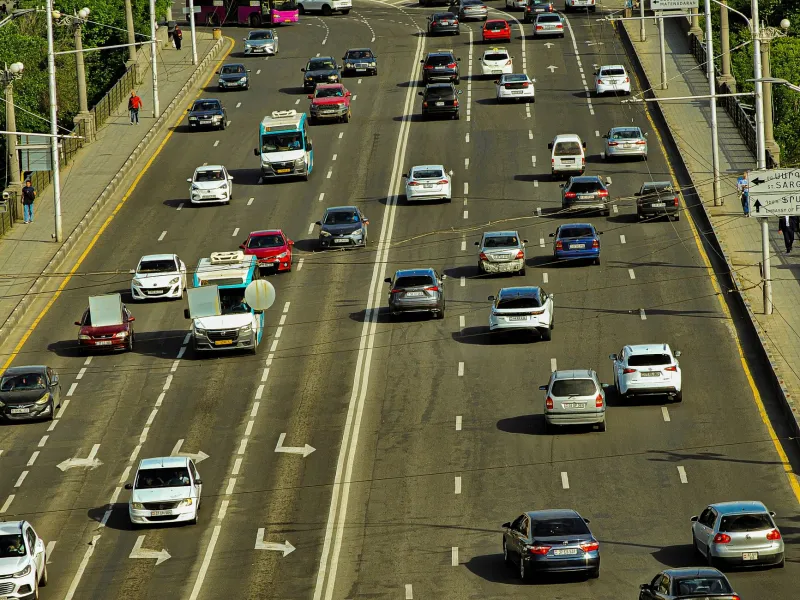
There is a particular kind of optimism that strikes during an apartment search. A unit comes in under budget, the square footage is generous, and the photos show a kitchen that actually has counter space. The neighborhood is unfamiliar but seems fine. The commute looks manageable on paper—thirty-five minutes by highway, maybe forty-five on a bad day.
Six months later, that same commute has quietly consumed hundreds of dollars in gas, added measurable wear to a vehicle, and extracted something harder to quantify: time that will never return.
This is the commute tax. It does not appear on any lease agreement, and no listing will disclose it. But for millions of renters and buyers across the country, it is one of the most consequential financial forces shaping their monthly reality.
Why Transportation Costs Are a Housing Expense
The conventional approach to housing affordability draws a clean line between where you live and how you get to work. Rent or mortgage on one side, transportation on the other. In practice, those two categories are inseparable.
The U.S. Department of Housing and Urban Development has long advocated for a combined housing-plus-transportation affordability standard, recommending that households spend no more than 45 percent of gross income across both categories together. Yet most renters and buyers evaluate properties against rent-to-income ratios alone, leaving the transportation side of the equation largely unconsidered until the bills arrive.
The American Automobile Association estimates the average cost of owning and operating a vehicle in the United States at over $10,000 annually when you factor in depreciation, insurance, fuel, maintenance, and financing. That figure climbs meaningfully when a long commute accelerates mileage accumulation and service intervals. A household driving 15,000 miles per year for commuting purposes alone is not simply paying for convenience—it is absorbing a substantial and recurring expense that effectively raises the cost of its housing.
The Time Cost That Never Shows Up on a Spreadsheet
Money is recoverable. Time is not.
A commute of forty-five minutes each way translates to ninety minutes daily, or roughly seven and a half hours per week. Over the course of a year, that amounts to more than 375 hours—nearly ten full work weeks—spent in transit. For salaried professionals, that time carries an implicit dollar value. For parents managing school schedules, that time carries a different but equally real weight. For anyone attempting to maintain a meaningful personal life alongside a demanding career, that time is simply gone.
When evaluating two properties with different price points but different commute profiles, the calculus deserves honest attention. A unit that costs $200 more per month but saves forty minutes of daily driving may represent a genuine net gain once time value is applied. The reverse is equally true: a seemingly affordable unit farther from employment centers may cost more in aggregate than its rent suggests.
Real Scenarios Across Life Stages
The commute tax does not affect everyone equally. Its weight shifts depending on career stage, household composition, and how a person generates income.
The early-career renter often prioritizes keeping rent as low as possible, accepting a longer commute in exchange for more square footage or a cheaper zip code. This trade-off can be reasonable in the short term, particularly when a vehicle is already paid off and mileage costs remain modest. But as career demands intensify and social commitments grow, the time cost of a distant address compounds. Many early-career renters discover that the energy spent commuting erodes the productivity and recovery time they need to advance professionally.
The dual-income household faces a more complex equation. When two people commute in different directions, the combined transportation burden can exceed $1,500 to $2,000 monthly in cities with limited transit infrastructure. A home positioned between two employment centers—or near robust public transit—can reduce that figure substantially, effectively functioning as a rent discount that never appears in the listing price.
The remote or hybrid worker presents perhaps the most nuanced case. With fewer required commute days, the temptation to accept a distant address in exchange for more space is understandable. However, hybrid schedules are not static. Commute frequency tends to increase over time as in-office expectations evolve. A location that works for two days per week in transit may become genuinely burdensome at four. Building in geographic flexibility—choosing a residence that would remain functional under a more demanding commute schedule—is a form of financial risk management.
The established homebuyer often has more latitude to absorb commute costs but faces the starkest opportunity costs. Time spent commuting in mid-career is time not spent with family, not spent on professional development, and not spent on the personal pursuits that define quality of life. For this cohort, proximity to employment often delivers returns that extend well beyond the financial.
Transit Access as a Price Anchor
In cities with reliable public transit infrastructure—Chicago, Washington D.C., Boston, parts of the Bay Area, New York—proximity to train and bus lines functions as a genuine price anchor. Properties within walking distance of a major transit hub command premiums that, when evaluated honestly, are frequently justified by the elimination of vehicle costs.
A household that can credibly eliminate a second car by living near transit may save $5,000 to $8,000 annually in ownership and operating costs. When amortized monthly, that figure can comfortably offset a higher rent. The math does not always work—transit quality varies enormously, and not every employment destination is transit-accessible—but the exercise of running those numbers before dismissing a higher-priced, transit-proximate property is worth undertaking.
How to Audit Your Own Commute Cost
Before committing to any address, consider building a simple commute cost audit alongside your standard budget review.
Start with the direct expenses: estimated fuel costs based on current prices and your vehicle's fuel efficiency, plus an honest accounting of added maintenance frequency if mileage will increase. Layer in insurance adjustments if applicable, and factor in any parking costs at the destination.
Next, estimate the time cost. Assign a conservative hourly value to your time—your actual hourly earnings is one reasonable benchmark—and multiply by your projected weekly commute hours. This number will feel abstract at first. Over a twelve-month lease term, it rarely stays abstract.
Finally, consider what that time and money would fund if redirected. For some households, the answer is a more centrally located apartment. For others, it is savings, debt reduction, or simply the restoration of evenings that currently disappear into a dashboard.
Location Is a Financial Decision
The most expensive home is not necessarily the one with the highest monthly payment. It is the one whose full cost—rent, transportation, time, and wear—exceeds what the household can sustainably absorb.
At Fairlane Residences, the properties we highlight are evaluated not just for their interior quality and community amenities, but for their positioning within the broader fabric of daily life. A residence that places you closer to the rhythms of your actual routine is not a luxury. It is a considered financial choice—one that tends to pay returns long after the lease is signed.
The commute tax is real. The question is simply whether you account for it before you move, or after.