Past the Polished Listing: How to Gauge a Property Management Team's True Reliability Before You Move In

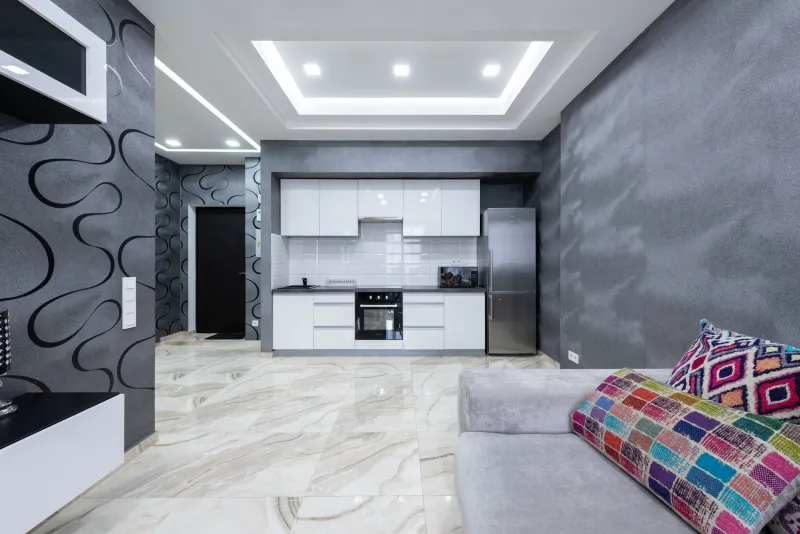
Property marketing has become extraordinarily sophisticated. Professional photography, carefully curated virtual tours, and aspirational lifestyle copy can make nearly any apartment community appear to be precisely what a prospective resident hopes to find. The images are luminous. The amenities read impressively. The website copy speaks warmly of a resident-first culture and a dedicated team committed to your comfort.
None of that tells you how long you will wait for a maintenance technician when your HVAC fails in July.
The gap between a community's marketing presentation and its operational reality is one of the most consequential—and least discussed—factors in the residential decision-making process. Understanding how to close that gap before you commit is not cynicism. It is due diligence.
Why Marketing Language Is Designed to Obscure, Not Inform
Property marketing operates within a specific set of conventions that prospective residents should learn to read critically. Phrases such as "responsive management team," "resort-style service," and "dedicated resident support" are effectively meaningless without supporting evidence. They describe an aspiration, not a documented standard.
This is not necessarily the result of deliberate deception. Marketing materials are produced to generate interest, and the teams that create them are rarely the same teams responsible for answering maintenance calls at eleven in the morning on a Wednesday. The presentation of a community and the daily administration of that community are often entirely separate functions.
The practical implication is straightforward: the information you need to evaluate a property's true service quality is almost never found in its marketing materials. You will need to seek it out through other means.
Start With Public Records, Not Star Ratings
Online reviews are a reasonable starting point, but they carry significant limitations. Review platforms are susceptible to selective responses, review gating, and the natural tendency for residents to submit feedback during emotional peaks—either at move-in, when enthusiasm is high, or following a serious dispute, when frustration is acute. The middle of a tenancy, when service quality is most representative, is rarely the moment someone thinks to leave a review.
More reliable signals can be found in sources that are less easily curated.
Municipal housing complaint records are publicly accessible in most US jurisdictions. Many cities and counties maintain searchable databases of code violations, habitability complaints, and unresolved maintenance citations. A property with a pattern of recurring violations—particularly involving HVAC systems, plumbing, or structural concerns—is communicating something important about its maintenance priorities that no marketing brochure will disclose.
Better Business Bureau filings and state attorney general complaint databases can surface patterns of dispute related to lease terms, security deposit handling, and resident communication failures. A single complaint tells you little. A cluster of complaints describing the same category of problem tells you considerably more.
Court records in many jurisdictions allow you to search for eviction filings associated with a specific property address. A high volume of eviction actions relative to the property's size can indicate either aggressive lease enforcement practices or a community experiencing significant resident turnover—both of which warrant further inquiry.
The Questions That Actually Reveal Operational Character
When you tour a property, the leasing agent's role is to present the community favorably. That is appropriate and expected. Your role is to ask questions that move beyond the presentation layer.
Consider asking the following, and pay close attention not only to the content of the answers but to how readily and specifically they are provided:
-
What is your average response time for non-emergency maintenance requests? A well-managed property will have a documented standard—commonly 24 to 48 business hours—and staff will be able to state it with confidence. Vague answers such as "we try to get to things quickly" are informative in their own way.
-
Do residents submit maintenance requests through an online portal, and can I see a sample of how those requests are tracked? The existence of a structured request system indicates organizational investment in accountability. Resistance to demonstrating it suggests that transparency is not a priority.
-
How is after-hours emergency maintenance handled? Is there an on-call technician, or does after-hours contact route to a call center that dispatches third-party contractors? The latter arrangement is not inherently problematic, but it is worth understanding before a pipe fails at midnight.
-
What is the current occupancy rate, and what has turnover looked like over the past year? High turnover in an established community is a meaningful indicator. Residents who are satisfied with management generally do not leave.
Speak Directly with Current Residents
No information source is more valuable—or more underutilized—than the people who already live in the building you are considering.
Approach residents casually during a tour or in common areas. Ask open-ended questions rather than leading ones: "What has your experience been like here?" and "Is there anything you wish you had known before moving in?" tend to generate more candid responses than asking directly whether management is good.
Pay particular attention to how residents describe the response to problems, not the absence of them. Every building will have maintenance issues over time. The meaningful variable is how management handles those issues when they arise.
Red Flags in the Fine Print
A lease agreement is a legal document, and its terms reflect the management team's actual priorities more honestly than any marketing copy.
Review the lease carefully for provisions governing maintenance response obligations, notice requirements before management may enter a unit, and the process for escalating unresolved service issues. A lease that places extensive obligations on the resident while providing management with broad discretion and minimal accountability timelines is revealing. So is a lease that lacks any defined process for resident dispute resolution.
Note, too, how promptly and thoroughly your questions during the leasing process are answered. A management team that is slow to respond to a prospective resident—someone they are actively trying to attract—is unlikely to become more attentive once you have signed.
A Practical Checklist Before You Commit
Before finalizing any residential decision, consider working through the following:
- Search the property address in your municipality's code enforcement or housing complaint database
- Review BBB filings and any state-level consumer complaint records
- Ask the leasing team for documented maintenance response time standards
- Request to see the resident portal or maintenance tracking system
- Speak with at least two current residents independently
- Review the lease for maintenance obligations, entry notice requirements, and dispute resolution terms
- Note the leasing team's own response time and thoroughness during your inquiry process
The right home is not simply the one with the most appealing finishes or the most comprehensive amenities list. It is the one backed by a management team that treats residents as partners rather than revenue sources—and that track record, unlike the photography, cannot be fabricated.