Built to Impress, Not to Last: How Chasing Design Trends Can Leave Your Apartment Feeling Obsolete
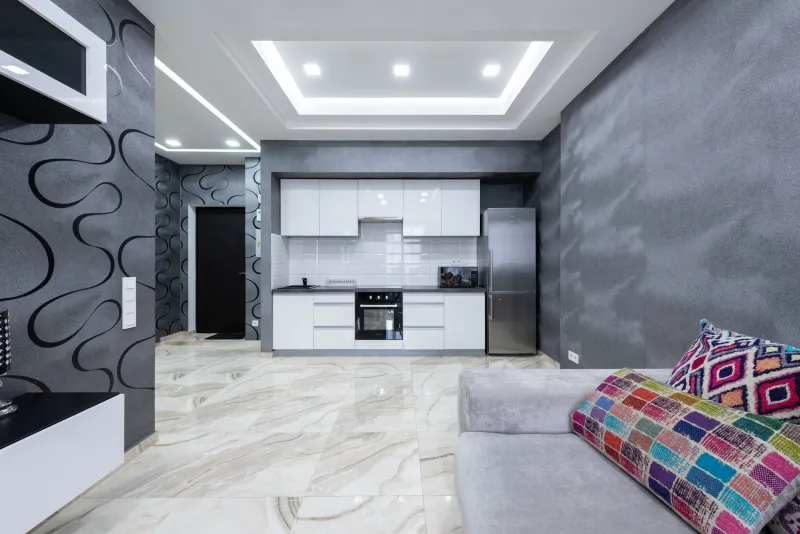
There is a version of apartment hunting that feels unmistakably like scrolling through a design magazine. The finishes are striking. The lighting is dramatic. The kitchen island appears to have been styled specifically for a social media photograph. And then, two or three years into a lease—or worse, a mortgage—something shifts. The palette that once felt sophisticated begins to feel oppressive. The layout that seemed clever reveals its impracticality. The unit that once commanded a premium starts to look, unmistakably, like a product of its particular moment.
This is not an accident. It is the predictable consequence of a development model that prioritizes visual impact at the point of sale over lasting livability. For renters and buyers who intend to occupy a space for more than a year or two, understanding how design trends age—and which ones age badly—is a form of financial self-protection.
Why Developers Chase Trends in the First Place
Residential development is a business, and like any business, it is responsive to market signals. When a particular aesthetic dominates design publications, social media platforms, and competing properties, developers have every incentive to replicate it. A building that photographs well fills faster. Units that feel current command higher asking prices.
The problem is that the timeline of development does not align neatly with the timeline of design trends. A building that breaks ground in one aesthetic moment may open its doors eighteen to thirty-six months later, by which point the design vocabulary it was built around has already begun to feel familiar—or, in some cases, tired. Residents then inherit a space optimized for a market moment that has already passed.
This dynamic is not unique to any single market or price point. It appears in luxury high-rises and mid-market apartment communities alike. The degree of commitment to trend-driven choices tends to vary, but the underlying incentive structure does not.
The Color Palette Problem
Few design decisions date a space more aggressively than a highly specific color palette applied throughout an entire unit. The all-white kitchen, the greige accent wall, the deep navy cabinetry that felt bold and considered in year one—these choices have a half-life measured in seasons, not decades.
The issue is not the colors themselves but the degree of commitment. A unit where every surface, fixture, and finish has been coordinated around a single trending palette leaves a resident with very little room to adapt the space as tastes evolve. Repainting walls is manageable. Replacing custom cabinetry, tile work, or countertops because the original palette no longer resonates is an entirely different proposition.
When evaluating a unit, consider whether the fixed elements—those you cannot change without significant expense—are genuinely neutral or simply currently fashionable. There is a meaningful difference between a warm white and a color that happens to be on trend at the moment of installation.
Gimmick Layouts and the Illusion of Innovation
Open floor plans, loft-style mezzanines, built-in Murphy beds marketed as "flexible living solutions," kitchen islands so large they impede natural movement through the space—these are design choices that perform well in renderings and on guided tours but often reveal their limitations in daily use.
The open floor plan, for instance, has dominated residential design for over a decade. Its appeal is visual: it makes spaces feel larger and more connected. Its practical drawbacks—the absence of acoustic separation, the challenge of maintaining a sense of order when cooking, working, and relaxing all occur within the same sightline—become apparent only after extended occupation.
Similarly, units designed around a single dramatic feature—an exposed concrete wall, a floor-to-ceiling window with no privacy solution, a kitchen backsplash that extends to the ceiling in a bold graphic tile—can feel exhilarating on first viewing and exhausting after six months. A design element that demands to be noticed every time you enter a room is a design element that has not been fully thought through for long-term habitation.
Materials That Photograph Well but Wear Poorly
Certain materials have become near-ubiquitous in contemporary residential development precisely because they reproduce beautifully in digital photography. Matte black fixtures. Waterfall-edge quartz countertops. Wide-plank engineered wood flooring in light, cool tones. Poured concrete accents.
Some of these materials are genuinely durable and functional. Others are chosen primarily for their visual impact and require more maintenance than a resident might anticipate. Matte black fixtures, for example, show water spots and fingerprints more readily than their polished counterparts and can be more difficult to clean without damaging the finish. Light-toned flooring in high-traffic areas reveals dirt and scratching more quickly than mid-tone alternatives.
Before being seduced by a material's appearance, it is worth asking how it performs under daily use, how it is maintained, and what it will look like in five years with normal wear. These are questions a leasing agent may not volunteer to answer but should be willing to address directly.
What Timeless Design Actually Looks Like
Timeless residential design is not the absence of aesthetic ambition. It is the discipline to prioritize function, proportion, and material quality over novelty. The hallmarks are quieter than trend-driven design, but they compound favorably over time.
Look for the following indicators when evaluating a unit:
- Neutral fixed elements with room for personalization: Cabinets, tile, and countertops in genuinely versatile tones allow residents to introduce personality through furnishings and accessories that can evolve.
- Layouts organized around how people actually live: Adequate storage, logical traffic flow, separation between sleeping and living areas, and kitchen configurations that accommodate real cooking rather than staged presentations.
- Quality of construction over surface-level finishes: Solid-core doors, well-sealed windows, properly installed flooring, and hardware that functions smoothly are less visible than a statement backsplash but far more consequential to daily experience.
- Lighting systems with flexibility: Fixed, dramatic lighting that cannot be adjusted is a design choice that serves photography. Layered lighting with dimmable options serves residents.
The Financial Case for Choosing Carefully
For renters, the stakes of a trend-driven unit are primarily experiential: you may find yourself living in a space that feels dated before your lease expires, with limited ability to modify what bothers you. For buyers, the stakes extend further. A unit whose design has visibly aged is a unit that may be more difficult to sell or rent at a premium—a consideration that belongs squarely in any honest financial analysis of a purchase.
The most resilient residential investment, whether measured in comfort or in resale value, tends to be one where the fundamentals—location, construction quality, spatial logic—are strong, and where the design vocabulary is restrained enough to remain relevant across multiple aesthetic cycles.
That is not a call for bland or uninspired spaces. It is a call for the kind of discernment that distinguishes a home designed to be lived in from one designed to be sold.