The Apartment Was Quiet at 2 PM. It Was Not Quiet at Midnight.
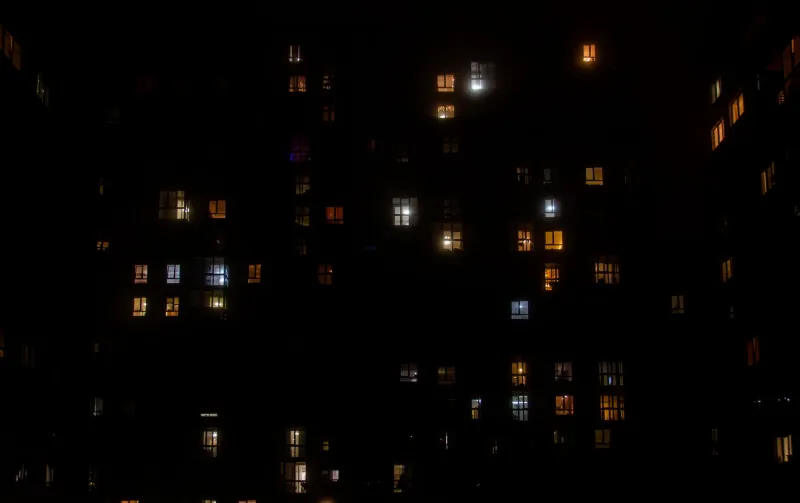
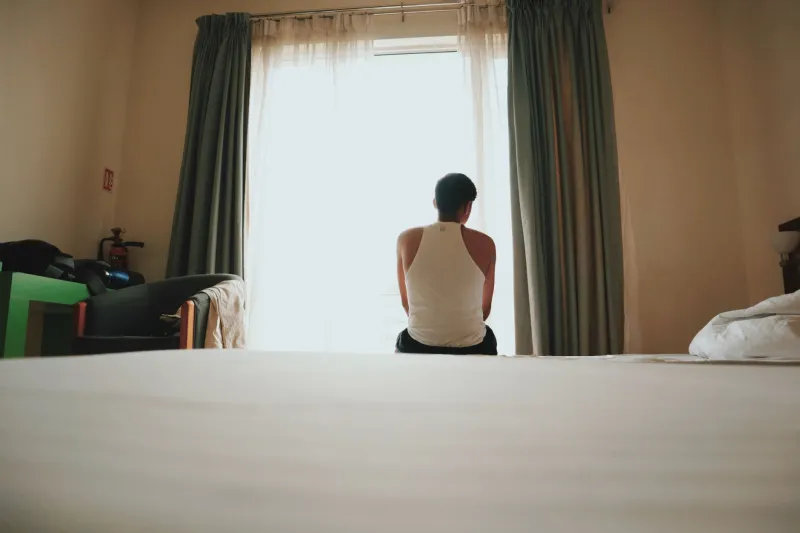
There is a particular kind of regret that sets in around the third week of a new lease. It arrives not in the daylight, when everything still seems manageable, but at 11:47 on a Tuesday night, when the delivery trucks are idling in the alley below your window, the bar two blocks away has just reached peak volume, and the upstairs neighbor's footsteps—inaudible during the Saturday afternoon tour—are tracing a familiar path across your ceiling.
Noise is among the most underweighted variables in residential decision-making, and among the most consequential once you have committed to a space. Unlike a kitchen you can learn to work around or a commute you can adjust for, chronic noise exposure affects sleep quality, stress levels, cognitive function, and long-term health in ways that no amount of white noise or blackout curtains can fully offset. It is also, critically, a variable that is almost impossible to assess from a single daytime showing.
This article is about how to assess it properly.
Why the Saturday Afternoon Tour Tells You Almost Nothing
Property showings are overwhelmingly concentrated in the hours between ten in the morning and five in the afternoon, on weekdays and Saturdays. This is practical for leasing agents and prospective tenants alike. It is also, from a noise assessment perspective, almost entirely useless.
Noise environments are not static. They are layered, time-dependent, and often dramatically different from one hour to the next. A unit facing a commercial street may be genuinely quiet at 2 PM on a Saturday—foot traffic is diffuse, delivery schedules have paused, the lunch rush at the restaurant below has ended—and genuinely uninhabitable at 7 AM on a Tuesday, when the produce trucks are unloading, the espresso machine is running at full volume, and the HVAC system for the ground-floor retail has cycled on for the day.
A unit adjacent to a nightlife district will present an entirely different acoustic profile at midnight on a Friday than it does at noon on a Wednesday. A building near an interstate may be acceptably quiet during off-peak hours and genuinely disruptive during the morning and evening commute windows. A unit beneath a flight path will vary by season, wind direction, and the specific routing decisions of air traffic control on any given day.
The Saturday afternoon showing captures one narrow slice of a continuous, shifting acoustic environment. It should be treated as a starting point for investigation, not a conclusion.
Building Orientation and Its Acoustic Consequences
Before visiting a unit at multiple times of day—which is the most reliable noise assessment strategy and will be addressed shortly—it is worth understanding how building orientation shapes noise exposure at the unit level.
Units facing a primary street will generally experience more noise than units facing an interior courtyard, a secondary street, or a rear alley—unless that rear alley serves as a delivery or service corridor, in which case it may be significantly louder during early morning hours than the street-facing side. Units on higher floors typically experience less noise from street-level sources but may be more exposed to mechanical noise from rooftop equipment.
Corner units, which are often marketed as premium offerings because of their additional windows and cross-ventilation, sit at the intersection of two noise environments rather than one. A corner unit at the junction of a residential street and a commercial avenue will receive the acoustic signature of both. This is not necessarily a disqualifying feature, but it is a variable that deserves explicit consideration.
Building construction type matters enormously. Concrete and masonry construction attenuates sound significantly more effectively than wood-frame construction, which transmits both airborne noise and impact noise—footsteps, dropped objects, furniture movement—with relatively little resistance. If the building was constructed before approximately 1960 or after approximately 2000 using concrete or steel-frame methods, its acoustic performance will generally be superior to wood-frame construction from the intervening decades.
The Multi-Visit Protocol
The most effective way to evaluate a unit's noise environment is to visit it at multiple times across the week. This requires either a cooperative leasing agent or, in buildings where self-guided tours are available, the initiative to schedule return visits at non-standard hours.
At minimum, consider visiting during the following windows: a weekday morning between 7 and 9 AM, a weekday evening between 6 and 9 PM, and a Friday or Saturday night after 10 PM. Each of these windows will reveal a distinct layer of the unit's acoustic environment. The morning visit will expose commuter traffic, delivery activity, and the startup noise of nearby commercial operations. The evening visit will reveal residential noise patterns from neighboring units and the ambient sound of nearby restaurants or retail. The late-night visit will surface bar district noise, late-arriving delivery trucks, and the particular quiet—or lack of it—that the building settles into after the day's primary activity has ended.
If multiple visits are not logistically possible, spend as much time as you can in the unit during your single visit. Open every window. Stand in each room and listen for two to three minutes. Pay particular attention to sounds that are intermittent rather than constant—a passing truck, a door slamming in the hallway, a bass frequency from a neighboring unit—because intermittent sounds are far more disruptive to sleep than consistent background noise.
Using Available Data to Supplement Direct Observation
Several publicly available resources can supplement direct noise observation. The Federal Highway Administration publishes traffic noise maps for major metropolitan areas, and many cities maintain their own environmental noise mapping tools that identify areas exceeding standard decibel thresholds. The FAA's noise exposure maps for airports under the Part 150 program identify residential areas within defined flight corridors, and flight tracking applications can give you a real-time sense of how frequently aircraft pass over a given address.
Local permit databases can reveal whether nearby properties have active entertainment licenses, which are a reliable predictor of late-night noise. A simple search of recent reviews for businesses within two blocks of a prospective address will often surface noise-related complaints from existing residents that no amount of in-person observation would capture.
The Financial Dimension of Getting This Wrong
Noise-related dissatisfaction is among the most commonly cited reasons for early lease termination, and early termination carries significant financial consequences. Breaking a lease before its natural expiration typically involves forfeiting a security deposit, paying a termination fee equivalent to one to three months' rent, and absorbing the transaction costs of finding and securing a new unit—application fees, moving expenses, overlap in rent payments—at a time and on a timeline not of your choosing.
The arithmetic is straightforward: a few additional visits to a prospective unit, or an hour spent reviewing available noise data, is an investment measured in time. The cost of discovering a noise problem after signing is measured in dollars and months of disrupted sleep. The two are not comparable.
Choose the apartment that will let you sleep. Everything else can be negotiated. That cannot.