What the Brochure Won't Show You: Evaluating a Building's Structural Health Before You Commit
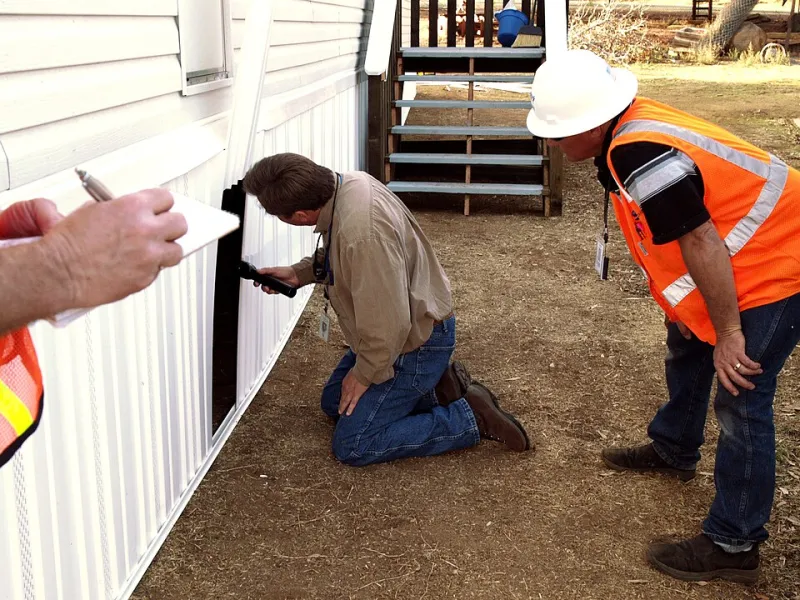
Photo: Amanda Bicknell, Public domain, via Wikimedia Commons
The Marketing Environment We Now Inhabit
Residential real estate marketing has become extraordinarily sophisticated at presenting amenity packages as proxies for quality. A rooftop terrace with curated seating. A fitness center with commercial-grade equipment. A co-working lounge with exposed brick and pendant lighting. Smart locks and app-controlled thermostats. These elements are not without value, but they are — in the context of a building's actual performance — essentially decorative.
The structural systems that determine whether a building will serve its residents reliably over time are invisible in marketing materials. They do not photograph well. They do not appear in virtual tours. They are not mentioned in the headline of the listing. And yet they are the variables that will most directly shape the quality of your daily experience from the moment the novelty of the amenity package fades — which, for most residents, occurs within the first six months of occupancy.
Understanding how to look past the presentation layer and evaluate the actual physical condition of a building is not a skill reserved for engineers or property investors. It is a practical competency that any renter or prospective buyer can develop, and it begins with knowing which questions to ask.
Why Structural Systems Determine Daily Quality of Life
Consider the systems that operate continuously, without your conscious attention, every day you occupy a residence: heating and cooling, plumbing supply and drainage, electrical distribution, building envelope integrity (the roof, exterior walls, and windows that separate conditioned interior space from outdoor conditions), and the foundation that supports everything above it.
When these systems function well, they are invisible. When they do not, they become the defining feature of your living experience — regardless of how impressive the rooftop terrace may be.
A building with an aging HVAC system will produce inconsistent temperature control, elevated utility costs, and recurring maintenance calls that disrupt your schedule. A building with deteriorating plumbing — common in structures built before the widespread adoption of modern supply and drain materials — may present with low water pressure, slow drains, recurring pipe failures, and the water damage that accompanies them. A compromised building envelope produces drafts, moisture intrusion, and the mold and air quality issues that follow.
None of these conditions are immediately apparent during a showing. All of them are discoverable through targeted questions and, in the case of a purchase, professional inspection.
The Questions Worth Asking Before You Sign
Property managers and leasing agents are accustomed to questions about pet policies, parking availability, and lease term flexibility. They are considerably less accustomed to questions about building systems — which is precisely why asking them is informative. The quality and specificity of the responses you receive tells you as much as the content.
Regarding HVAC systems:
- What is the age of the heating and cooling equipment serving this unit?
- Are units served by individual systems or a centralized building system?
- When was the last full service or replacement of the major components?
- What is the average utility cost for this unit during peak heating and cooling months?
A property management team that maintains its buildings proactively will be able to answer these questions with reasonable specificity. Vague responses, deflection, or claims that records are not readily available are meaningful signals.
Regarding plumbing:
- What are the supply and drain pipe materials used in this building?
- Has the building experienced recurring plumbing failures or water damage incidents in the past five years?
- What is the water heater configuration — individual units or shared building system — and what is its age?
Older buildings constructed with galvanized steel supply pipes or cast iron drain systems are not automatically problematic, but they do carry elevated maintenance risk and deserve direct inquiry. A management team unwilling to discuss this history is a management team worth approaching with caution.
Regarding the roof and building envelope:
- What is the age of the current roof, and when is the next scheduled inspection or replacement?
- Has the building experienced any water intrusion events — roof leaks, window failures, or foundation moisture — in the past three to five years?
- What is the window type and age, and are they original to the building's construction?
Regarding the foundation and structural elements:
- Has the building undergone any structural assessments or remediation work?
- Are there any known foundation concerns or active monitoring programs in place?
This final category of questions may feel unusually direct in the context of a rental inquiry. Ask them anyway. A building with a healthy structural history will have straightforward answers. A building with unresolved concerns will reveal that fact — through evasion, incomplete records, or the visible evidence of recent remediation work that has not been proactively disclosed.
The Amenity Calculation Reconsidered
This is not an argument against amenities. A well-maintained fitness center, a functional package room, and reliable high-speed internet infrastructure all contribute genuinely to resident quality of life. The distinction worth drawing is between amenities that represent investment in the resident experience and amenities that represent marketing investment in leasing velocity.
A building that has deferred maintenance on its mechanical systems while installing a rooftop amenity deck has made a specific financial decision — one that prioritizes attracting new tenants over serving existing ones. That decision will express itself, eventually, in the form of deferred problems that become your problems: the HVAC that fails during the first heat wave of summer, the plumbing incident that damages your belongings, the drafty windows that inflate your utility costs through every winter month.
Conversely, a building that presents modestly in its marketing but demonstrates a clear record of systematic maintenance investment — documented HVAC service history, recent roof work, updated plumbing where age warranted it — is a building that has made a different decision. One that will serve you more reliably over the course of a lease term or ownership period.
A Practical Framework for Evaluation
Before committing to any residence, consider applying a simple two-column framework. In one column, list every amenity or finish feature that contributed to your positive impression of the property. In the other, list what you know — specifically, from direct inquiry or documentation — about the condition of the building's structural systems.
If the first column is substantially longer than the second, you have not yet gathered enough information to make a sound decision. The goal is not to find a perfect building — such a building does not exist — but to understand clearly what you are committing to, and to ensure that the things most likely to affect your daily quality of life have been honestly evaluated.
The rooftop bar will be there on the day you move in. Whether the building beneath it has been maintained with equal care is the question worth answering first.