Your Neighbors Are Not Accidental: How Your Residential Address Quietly Shapes Your Social World
Most people approach a housing search with a familiar checklist: square footage, monthly cost, proximity to work, the condition of the kitchen. These are sensible priorities. But there is a dimension of residential life that rarely appears on any checklist, one that sociologists have studied for decades and that quietly governs some of the most consequential aspects of daily existence — the social world your address will build around you.
Where you live does not merely determine your commute or your grocery store. It determines, in ways both subtle and profound, who will become your friends, which communities will absorb your time and energy, and what kind of social life will feel natural versus effortful. This is not a matter of coincidence. It is a matter of design — urban, architectural, and demographic — and it is worth examining carefully before you sign a lease or close on a purchase.
The Proximity Principle: Why Physical Distance Governs Social Connection
One of the most replicated findings in social psychology is the mere exposure effect: we tend to develop positive feelings toward people and things we encounter repeatedly. In residential settings, this translates directly into friendship formation. Studies dating back to the 1950s — most notably Leon Festinger's landmark research on MIT housing communities — demonstrated that physical proximity, not shared interests or background, was the single strongest predictor of friendship formation among residents.
This finding has held across subsequent decades of research. The neighbor whose path you cross at the mailbox, the resident who parks one space over from yours, the person whose dog you see every morning on the same walking trail — these incidental encounters are the raw material from which meaningful relationships are built. The architectural layout of a residential community, the placement of shared amenities, the design of common corridors and outdoor spaces: all of these shape who crosses your path, and therefore who enters your life.
This is not a trivial observation. It means that when you evaluate a residential community, you are also evaluating the likely composition of your future social network.
Neighborhood Demographics and Social Opportunity
Beyond the immediate building or complex, the surrounding neighborhood exerts its own gravitational pull on your social world. Different neighborhoods in any American city attract residents at different life stages, income levels, professional backgrounds, and cultural orientations. These demographic patterns are not arbitrary — they are the cumulative result of pricing, zoning, transportation infrastructure, and the kinds of businesses and institutions that take root in a given area.
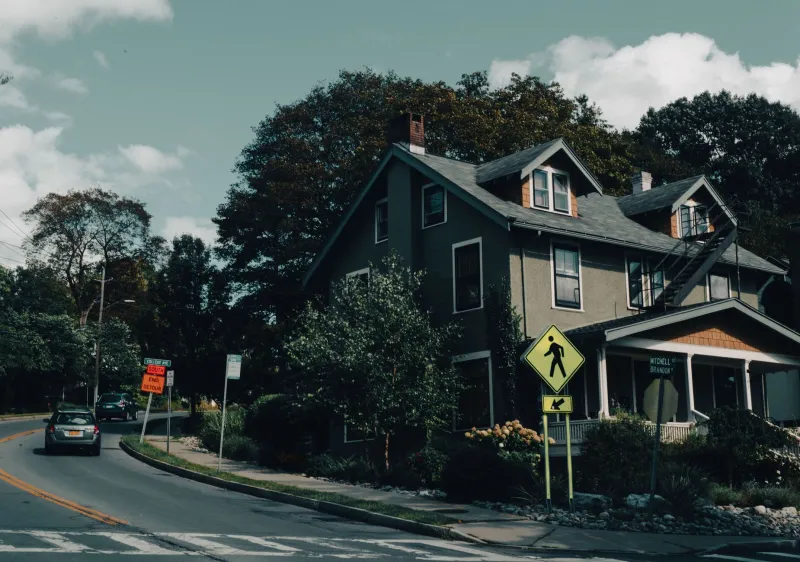
A neighborhood anchored by young professionals, independent restaurants, and walkable retail will tend to cultivate a different social ecosystem than one organized around larger homes, school district boundaries, and quieter streets. Neither is inherently superior, but each will shape the social opportunities available to you in distinct ways. A resident who values spontaneous social encounters and a dense web of acquaintances may thrive in one environment and feel isolated in another — even if both offer comparable square footage at a similar price point.
The practical implication is straightforward: before committing to an address, it is worth asking not only who lives there now, but what kind of person the neighborhood tends to attract over time, and whether that profile aligns with the social life you are hoping to build.
Shared Spaces as Social Infrastructure
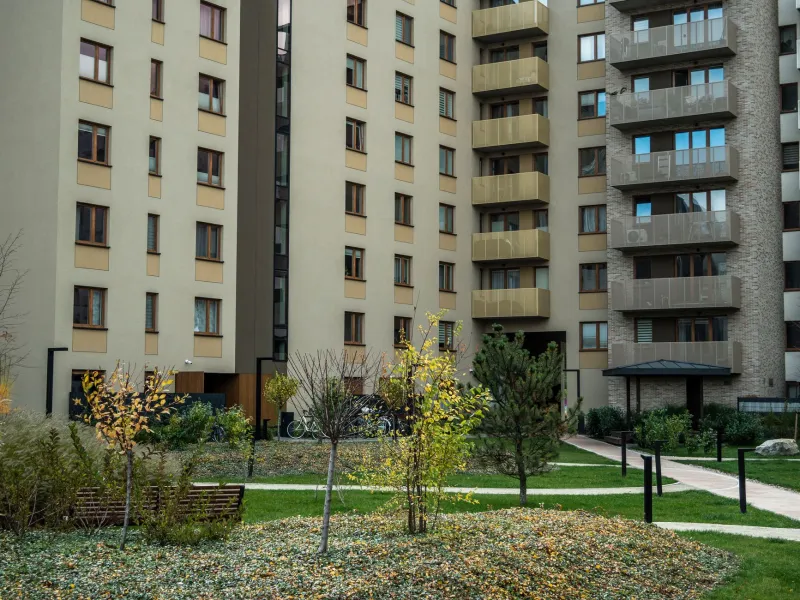
Within a residential community itself, the presence and quality of shared spaces functions as social infrastructure. A well-designed common area — a courtyard, a rooftop terrace, a fitness center with adequate space for actual use — does more than justify a line item on a marketing brochure. It creates repeated, low-stakes opportunities for residents to encounter one another in contexts that are conducive to conversation.
Research in environmental psychology consistently finds that residents of communities with well-maintained, actively used common spaces report higher levels of social connection and belonging than those in communities where shared areas are poorly designed or underutilized. The difference is not merely aesthetic. It is functional: shared spaces either facilitate or impede the kind of casual, repeated contact that social bonds require to form.
When touring a prospective residence, pay close attention to whether the shared amenities appear to be in active use. An empty gym at peak hours or a courtyard with no furniture is telling you something. So is a lobby where residents linger and speak to one another.
The Social Cost of Optimizing Only for Price
There is a quiet trade-off embedded in decisions made purely on the basis of cost. Selecting a residence in a neighborhood that is geographically or socially isolated from the communities, institutions, and gathering places that matter to you may reduce your monthly expenditure while increasing the effort required to maintain an active social life. Over time, that friction compounds.
Social connection is not a luxury amenity. It is a documented determinant of health, cognitive function, and life satisfaction. The Harvard Study of Adult Development — one of the longest-running studies of human wellbeing in history — identified the quality of social relationships as the single most reliable predictor of long-term flourishing. Housing decisions that inadvertently undermine social connection are therefore not neutral from a financial perspective either: the downstream costs to wellbeing are real, even when they do not appear on a budget spreadsheet.
This does not mean that cost is irrelevant. It means that the full accounting of any housing decision should include an honest assessment of what the location will do to your social world, not merely what it will do to your monthly expenses.
Choosing a Community That Reflects Your Social Priorities
The most useful reframe for any housing search may be this: you are not simply selecting a unit. You are selecting a social environment. The neighbors you will encounter, the institutions within walking distance, the demographic character of the surrounding area, the quality of shared spaces within the building — all of these are inputs into the social life you will actually live.
At Fairlane Residences, the communities we feature are evaluated not only on the basis of finishes and floor plans, but on the broader residential experience they offer — including the quality of the social ecosystems they support. A residence that feels right is one where the physical environment, the community culture, and the surrounding neighborhood work together to support the life you are genuinely trying to build.
The friends you will make five years from now, the communities that will shape your thinking, the social rhythms that will define your weeks — these are not accidents. They are, in large part, a function of the address you choose today. That is a dimension of the housing decision worth taking seriously.