The Street Outside Your Window Is Shaping Your Mind: What Urban Design Does to the Way You Feel
Most prospective residents evaluate a home from the inside out. They scrutinize square footage, assess kitchen finishes, and calculate whether the closets are adequate. What they rarely do is stand on the sidewalk—if one exists—and ask a more fundamental question: What is this street doing to me?
The answer, according to a growing body of environmental psychology and urban planning research, is quite a lot. The physical anatomy of a street—its tree canopy, the width of its pedestrian corridors, the speed and volume of passing traffic, the distance between buildings and the road—functions as an invisible architecture that shapes your mood, your social behavior, and your long-term sense of belonging in ways that no floor plan ever could.
At Fairlane Residences, we believe that finding a home that truly fits you requires looking beyond the front door. The street is not merely a path to your parking space. It is, in many respects, the first room of every home.
Why Trees Are Not Just Scenery
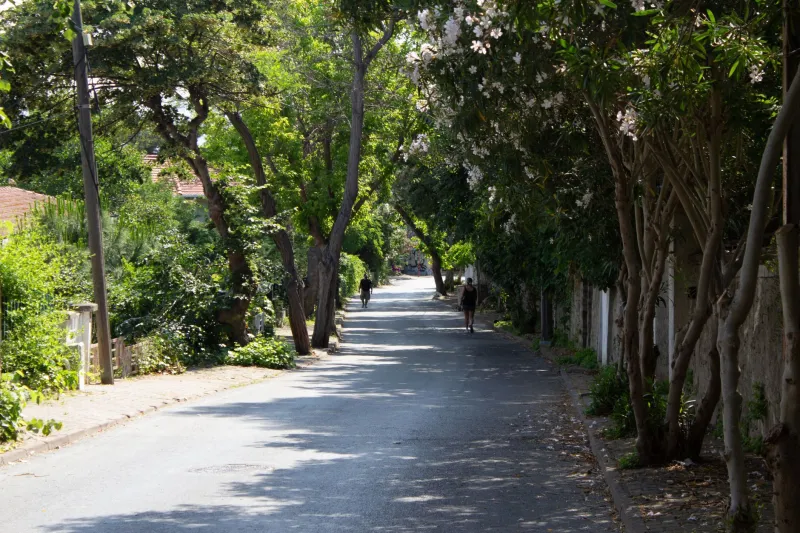
A boulevard lined with mature oaks or elms does more than improve a neighborhood's aesthetic appeal. Research consistently links tree canopy coverage to reduced cortisol levels—the hormone most closely associated with chronic stress—among urban residents. A study conducted across multiple American cities found that neighborhoods with higher street tree density reported measurably lower rates of anxiety and depression among their populations, independent of income level.
The mechanism is not mysterious. Trees buffer noise. They filter air particulates. They provide shade that makes walking comfortable in summer months, which in turn encourages pedestrian activity. And pedestrian activity, as we will examine shortly, is the engine of community life.
When you are evaluating a neighborhood, resist the temptation to dismiss tree coverage as a cosmetic detail. A street stripped of canopy—one that offers no shade, no sound absorption, and no visual relief from concrete and asphalt—is a street that subtly discourages outdoor time. And a street that discourages outdoor time is one that quietly isolates its residents from one another.
Sidewalk Width and the Geometry of Social Life
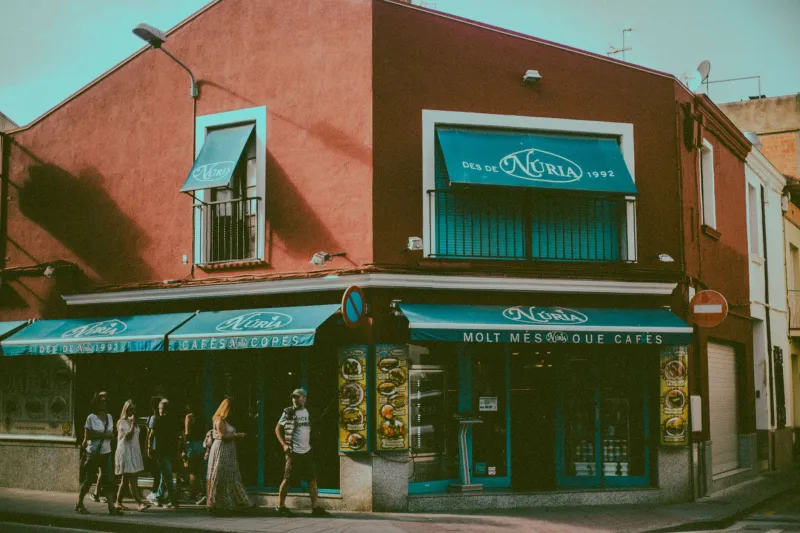
A narrow sidewalk forces pedestrians into single file. A generous one invites side-by-side conversation. This distinction may sound trivial until you recognize what it means in practice: sidewalk width is one of the primary physical determinants of whether strangers become neighbors.
Urban designers refer to this as the "social infrastructure" of a street. Wide, well-maintained pedestrian corridors with adequate lighting and occasional seating create what sociologists call "third places"—environments where casual, unplanned social interaction becomes possible. These interactions, even when brief, are strongly associated with reduced loneliness and a heightened sense of community belonging.
Contrast this with the experience of living along a strip-mall corridor—a typology that dominates many American suburban arterials. These streets are engineered for vehicle throughput, not human comfort. Sidewalks, when they exist at all, are narrow and exposed. Crosswalks are infrequent. Destinations are set back behind vast parking fields, making the simple act of walking to a coffee shop feel like a minor ordeal. Residents of such corridors consistently report lower rates of neighborly interaction and higher rates of social isolation, outcomes that have tangible consequences for mental health over time.
When you visit a prospective home, walk the surrounding blocks at different times of day. Are other people walking? Are they stopping to talk? Is there enough physical space—and enough reason—to linger?
Traffic Patterns and the Stress You Stop Noticing
Chromic noise exposure is one of the most underestimated stressors in residential life. Traffic noise, in particular, has been linked in longitudinal studies to elevated blood pressure, disrupted sleep architecture, and diminished cognitive performance—even when residents report that they have "gotten used to it."
The adaptation is largely illusory. The body continues responding to noise stimuli even when the conscious mind has learned to tune them out. This means that a home on a high-volume arterial road may feel acceptable during a daytime showing but is quietly taxing your nervous system every night.
Street design mediates this significantly. Traffic calming measures—raised crosswalks, narrowed travel lanes, roundabouts, on-street parking buffers—reduce both vehicle speeds and the associated noise profile of a corridor. Streets with these features tend to attract more pedestrian activity precisely because they feel safer and sound quieter, creating a reinforcing cycle of human presence and reduced vehicle dominance.
When assessing a neighborhood, look for these design signals. A street with consistent 25 mph traffic and on-street parking between the sidewalk and the travel lane offers a meaningfully different living experience than a four-lane arterial with a posted limit of 45 mph, regardless of how similar the homes along each corridor may appear.
Building Setbacks and the Feeling of Being Watched Over
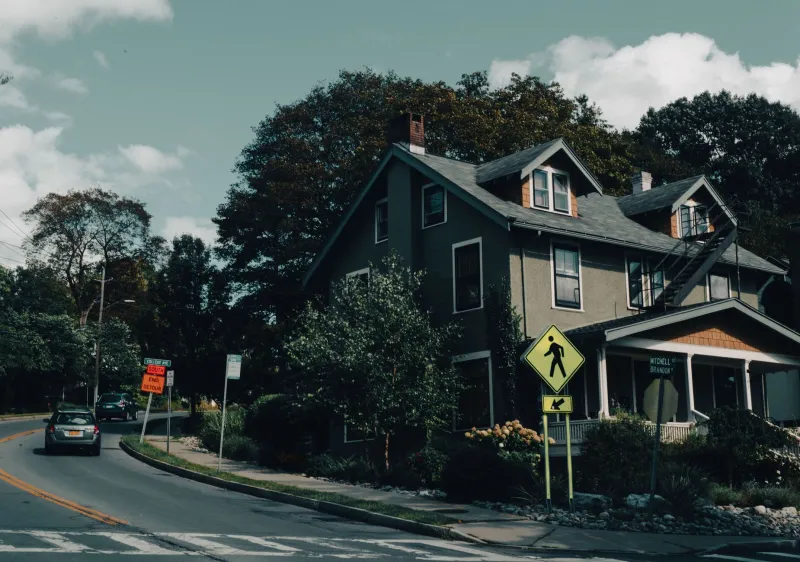
The distance between a building's facade and the street edge—its setback—has a profound effect on what urbanists call "eyes on the street," a concept popularized by Jane Jacobs in her seminal work on American city life. When homes and apartment buildings sit close to the sidewalk, with windows and stoops that face the public realm, residents naturally observe and engage with their surroundings. This passive surveillance creates a sense of safety and social accountability that deep setbacks cannot replicate.
Conversely, a neighborhood where buildings are pushed far back from the street—separated from pedestrians by wide lawns or surface parking—tends to feel anonymous. There are fewer opportunities for the incidental eye contact and brief exchanges that accumulate into a genuine sense of community over months and years.
This is not an argument against privacy or green space. It is a recognition that the relationship between a building and its street is a social contract, and that the terms of that contract matter to how you will feel living there.
What to Look For When You Evaluate a Street
Approaching street design as a deliberate evaluation criterion rather than background scenery requires a modest but meaningful shift in how you conduct your neighborhood research. Consider the following when assessing any prospective address:
- Canopy coverage: Are mature trees present along the sidewalk? Do they provide meaningful shade and visual continuity, or is the street largely exposed?
- Sidewalk quality and width: Is the pedestrian infrastructure well-maintained and generous enough for two people to walk comfortably side by side?
- Traffic volume and speed: At what times does traffic peak, and how does vehicle speed affect the comfort of walking or sitting outdoors?
- Pedestrian activity: Are other residents visibly using the street? Activity begets activity—a pedestrian-friendly street tends to show it.
- Building orientation: Do homes and residential buildings engage the street with windows and entries, or do they turn away from it?
- Noise environment: Spend time on the sidewalk during morning and evening hours, not just midday, to understand the actual sound profile.
None of these factors will appear on a listing page. All of them will shape your daily experience in ways that accumulate quietly and significantly over the length of a lease or the duration of homeownership.
The Street as an Extension of Home
At Fairlane Residences, we hold that a home is not defined solely by what lies within its walls. The street outside—its rhythms, its scale, its relationship to the people who use it—is part of the living environment you are choosing. A well-designed street does not merely connect you to destinations. It restores your attention after a long day, encourages the kind of low-stakes social contact that quietly sustains mental health, and gives you a reason to step outside simply because stepping outside feels good.
The home that feels like you is not just the one with the right layout. It is the one on the right street.