Why the Streets Themselves Keep People From Leaving
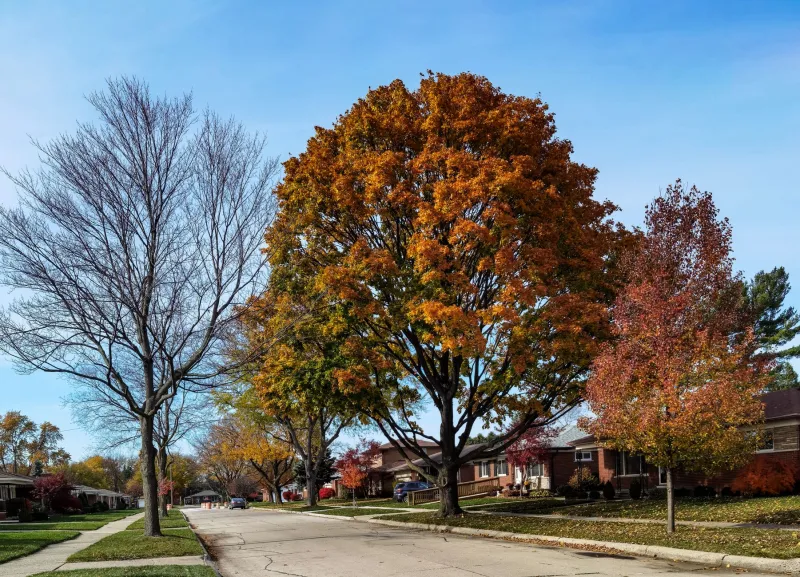
Ask a longtime resident why they have never left their neighborhood, and you will rarely hear them cite the proximity to a grocery store or the quality of their building's lobby. More often, they struggle to articulate it at all. They mention the way the light falls through the elm trees in October. The way they always seem to run into someone they know at the corner. The feeling, difficult to name, that the neighborhood was designed with them in mind.
That feeling is not accidental. It is, in most cases, structural—the direct product of how the streets were planned, how the blocks were proportioned, and how the relationship between the sidewalk and the front door was originally conceived. Mid-twentieth century residential planning, for all its historical complexity, produced street environments that modern development has struggled to replicate. Understanding why requires looking closely at what those older grids were actually doing.
The Block as a Social Unit
Contemporary residential developments frequently organize themselves around amenities: the rooftop deck, the fitness center, the co-working lounge. These spaces are designed to generate community by concentrating residents in shared areas at predictable times. The approach is logical but often insufficient, because it treats community as a product of programming rather than of environment.
Mid-century neighborhood planning operated from a different premise. The block itself was understood as the primary social unit. Streets were laid out at intervals that encouraged pedestrian movement without demanding it. Blocks were short enough that walking to a neighbor's home felt natural rather than like an expedition. Front yards and stoops were positioned to facilitate the kind of incidental, low-stakes interaction that builds familiarity over time.
This distinction matters enormously for residential satisfaction. Research into neighborhood attachment consistently finds that residents form the strongest bonds not through organized events but through repeated, unplanned encounters. The person you see walking their dog every morning. The neighbor whose porch light you notice is off when it should be on. These small recognitions accumulate into something that functions like community—and they require a physical environment that makes them possible.
Consistency as a Form of Comfort
One of the defining characteristics of well-retained neighborhoods is architectural and spatial consistency. When a block presents a coherent visual rhythm—similar setbacks, comparable building scales, a unified relationship between structure and street—residents develop a stronger psychological connection to the place. Consistency signals permanence, and permanence is foundational to the decision to stay.
Fragmented modern developments, by contrast, often produce environments that feel provisional. A six-story glass tower abutting a surface parking lot abutting a row of townhouses communicates, spatially, that the neighborhood is still being decided. Residents in these environments are more likely to treat their tenancy as temporary, because the environment itself reads as temporary.
The tree-lined avenues that characterize neighborhoods built in the mid-twentieth century do more than provide shade. They establish a canopy that visually unifies a street regardless of minor variations in the buildings beneath it. They slow traffic, which reduces noise and increases the comfort of pedestrian movement. They mature over decades, becoming evidence of the neighborhood's own continuity—and evidence, to the resident, that staying has value.
What Retention Data Actually Reveals
Neighborhoods with high residential retention rates share several physical characteristics that are worth examining before choosing where to live. Walkable block lengths—typically between 200 and 400 feet—are consistently associated with higher levels of pedestrian activity, which correlates with stronger social networks among residents. Streets with continuous building frontage, where storefronts or residences line the sidewalk without interruption, produce more active street life than those punctuated by parking structures or setback plazas.
Perhaps most significantly, neighborhoods where the street grid was planned as a whole rather than assembled piecemeal tend to retain residents at higher rates than those developed incrementally without a unifying spatial logic. The reason is not nostalgia. It is that coherent planning produces environments where daily life flows without friction—where the walk to the park, the route to the bus stop, and the path to a neighbor's door all feel considered rather than coincidental.
Reading a Street Before You Commit to a Building
For anyone evaluating a potential home, the street outside the building deserves at least as much attention as the unit inside it. A few specific observations can reveal a great deal about how a neighborhood functions and, by extension, how long residents tend to stay.
Notice the sidewalk width and condition. Generous, well-maintained sidewalks indicate both municipal investment and pedestrian use—two things that reinforce each other over time. Observe the relationship between parked cars and the street. A buffer of parallel parking between the travel lane and the sidewalk creates a physical and psychological barrier that makes walking more comfortable and encourages lingering.
Pay attention to how many residents you observe outside during your visit, and at what times. A street that shows evidence of casual outdoor activity—people sitting on steps, neighbors talking across a fence, children playing within view of a front window—is a street where the physical environment is supporting social life rather than working against it.
Finally, consider the age of the trees. Mature street trees are among the most reliable indicators of a neighborhood's stability. They take decades to reach their full canopy, and their presence signals that the street has been consistently maintained and valued across multiple generations of residents. That kind of continuity does not happen by accident. It happens because people chose to stay.
The Case for Choosing the Street, Not Just the Unit
The decision to rent or purchase a home is typically framed around the unit: its square footage, its finishes, its floor plan. These details matter, but they exist within a larger spatial context that will shape your daily experience far more than any individual feature of the apartment itself.
The neighborhoods that hold people—the ones where residents renew their leases year after year, where owners stay for decades, where the community feels earned rather than manufactured—are almost always neighborhoods where the street was designed with intention. Where the block proportions encourage movement. Where the building relationships create enclosure without confinement. Where the physical environment does the quiet, continuous work of making people feel that they belong.
That feeling is worth looking for before you sign anything.