Why the Street You Live On Matters More Than the Square Footage Inside
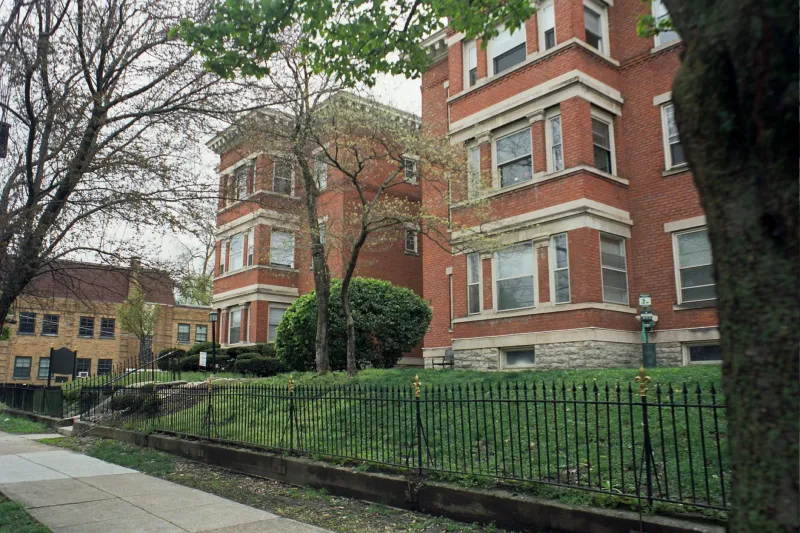
When most people begin searching for a new home, they lead with the obvious metrics: square footage, monthly rent or mortgage payment, number of bedrooms, proximity to work. These are sensible starting points. But seasoned residents — those who have moved more than once and learned from each transition — will tell you something that rarely appears on a listing sheet: the character of the neighborhood surrounding a home has an outsized influence on whether that home ever truly feels like yours.
At Fairlane Residences, we've built our philosophy around a straightforward but often overlooked truth. A beautifully appointed apartment inside a disjointed, architecturally inconsistent neighborhood will always feel slightly off — like wearing a tailored suit to an event where no one else dressed up. The inverse is equally powerful: a modest, well-priced unit situated within a thoughtfully designed community can feel aspirational, grounding, and deeply livable from the moment you arrive.
This is what we call the Fairlane Effect.
The Invisible Architecture of Belonging
Urban designers and environmental psychologists have long studied what makes certain neighborhoods feel intentional while others feel merely assembled. The difference rarely comes down to price point alone. Instead, researchers point to a cluster of design principles that operate almost subconsciously on residents and visitors alike.
Streetscape continuity — the consistent rhythm of building setbacks, tree canopy, sidewalk width, and facade materials along a given block — creates what designers call a "sense of enclosure." When these elements align, pedestrians feel held by the space rather than exposed within it. This sensation, while difficult to articulate, is immediately felt. It is the reason certain historic American neighborhoods in cities like Savannah, Georgia, or the Capitol Hill district of Seattle produce such strong emotional responses in first-time visitors. The street itself communicates care.
Architectural consistency amplifies this effect. Communities where buildings share a common material palette, cornice height, or stylistic vocabulary — even when individual structures vary in their details — read as coherent wholes. Residents who live within these environments report higher levels of neighborhood satisfaction and, notably, stronger social ties with their immediate neighbors. When a place looks like someone thought carefully about it, people tend to treat it accordingly.
What "Generic" Actually Costs You
The alternative is familiar to anyone who has rented in a rapidly developed suburb or moved into a large apartment complex that was designed in isolation from its surroundings. These environments are not uncomfortable, exactly. But they rarely inspire attachment. The facades are pleasant in a neutral, inoffensive way. The landscaping is maintained but not memorable. The experience of arriving home is efficient rather than restorative.
This distinction matters more than it might initially seem. Research published by the American Institute of Architects suggests that residents in environments with strong design coherence report meaningfully lower stress levels than those in visually fragmented neighborhoods — even when controlling for income and commute time. The built environment, it turns out, is not a passive backdrop to daily life. It is an active participant in your emotional experience of that life.
Generic design, in other words, carries a hidden cost that never appears on your lease agreement.
The Craftsmanship Standard: Learning from Classic American Neighborhoods
Some of the most enduring residential neighborhoods in the United States were built during eras when developers operated under an unspoken but widely shared craftsmanship standard. The bungalow districts of Pasadena, California. The brownstone blocks of Brooklyn's Park Slope. The tree-lined streets of older Midwestern cities like Indianapolis or Columbus, where front porches were considered a civic amenity as much as a private one.
These neighborhoods share several characteristics worth examining carefully. First, they were built at a human scale — meaning the relationship between building height, street width, and sidewalk proportion was calibrated for pedestrian experience rather than vehicular efficiency. Second, they incorporated durable, tactile materials: brick, stone, wood trim, and cast iron that age gracefully rather than degrading into visual noise. Third, and perhaps most importantly, they were designed with the understanding that a neighborhood is a shared project, not simply a collection of individual properties.
Modern residential developers who internalize these lessons — rather than simply borrowing their aesthetic vocabulary — produce communities that residents stay in longer, recommend more enthusiastically, and remember more vividly.
How to Evaluate Neighborhood Character Before You Sign
For prospective renters and buyers, translating these principles into a practical search strategy requires slowing down the evaluation process in a way that runs counter to the urgency most real estate transactions generate. Here are several approaches worth adopting.
Walk the block at different times of day. A neighborhood's character shifts between morning, afternoon, and evening. The presence of pedestrians, the quality of lighting, the noise levels, and the behavior of neighboring properties all tell different stories at different hours. A single midday visit is rarely sufficient.
Assess the transitions. Pay attention not just to the block where a prospective home is located, but to the blocks immediately adjacent. Neighborhoods with strong character tend to maintain it across multiple blocks. Those with weak or inconsistent character often reveal their fragility at the edges.
Look at what's been maintained — and what hasn't. The condition of sidewalks, street trees, and neighboring facades signals how much collective investment a community receives. Deferred maintenance in shared or public spaces often indicates broader disinvestment that is difficult to reverse once established.
Consider the commercial context. The retail and dining environment within walking distance of a residential community is not merely a convenience factor — it is a direct expression of neighborhood identity. Independent businesses, farmers markets, and locally owned cafes tend to signal communities with strong social fabric. Their presence, or absence, tells you something important about who lives there and how they relate to one another.
Design as a Statement of Values
At Fairlane Residences, our commitment to cohesive design is not simply an aesthetic preference. It reflects a deeper conviction: that the places people call home should communicate respect — for the residents who live within them, for the neighbors who surround them, and for the broader communities in which they are situated.
Every development we feature has been evaluated not only on the quality of its interior finishes and amenities, but on its relationship to the neighborhood it inhabits. Does it reinforce the streetscape or disrupt it? Does it contribute architectural interest or simply fill a lot? Does it feel like it belongs?
These are questions that matter enormously to the people who will ultimately live there — even when those people haven't yet found the language to ask them.
Finding a home that truly fits your life begins long before you step through the front door. It begins at the end of the driveway, on the sidewalk, at the corner of a street that either welcomes you or simply tolerates your presence. The Fairlane Effect is the recognition that this difference is not incidental. It is everything.